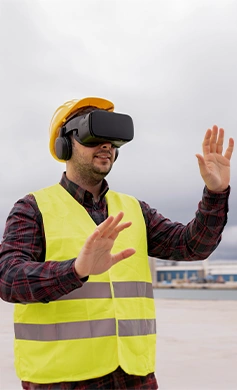
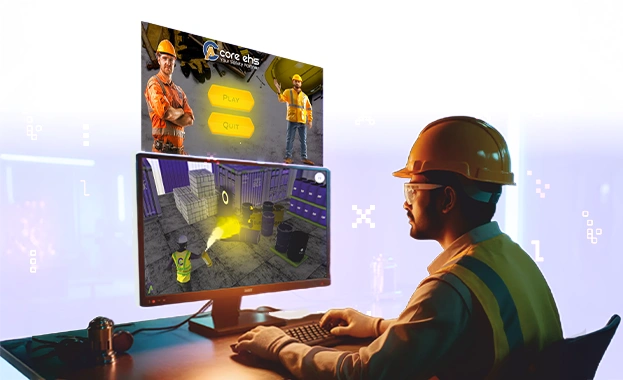
Gamification bridges the gap between training and behaviour.
When employees experience real-time consequences in a simulated environment, their brains form stronger memory links between actions and outcomes.
Employees don’t just learn about safety, they practice it, test it, and make it instinctive.
This process, known as experiential learning, drives better retention than traditional lectures or e-learning modules.
Gamified safety programs also tap into positive reinforcement and healthy competition, which trigger emotional engagement and intrinsic motivation.
Over time, these repeated experiences shape habitual safe behaviour, transforming safety from a rule to a reflex.

 +91 72929 29357
  info@coreehs.com